
NYC Paid Safe and Sick Leave is a 2026 city law giving covered employees paid time off for illness or safety reasons, plus a separate unpaid bank, with hours set by employer size rather than one flat amount for everyone.
That size-based structure is what trips up most employers and employees, since hour counts and thresholds change case by case.
The catch: a meaningful share of those hours come unpaid by default, adding real complexity.
NYC Paid Safe and Sick Leave 2026: How Many Hours Can You Take?
This right comes from the New York City Earned Safe and Sick Time Act, also called ESSTA or the NYC Protected Time Off Law, part of the broader set of NYC worker pay and labor rules employees should know. It covers four things: paid sick leave, paid safe leave, unpaid protected time off, and paid prenatal leave.
Quick Answer: NYC Protected Time Off Entitlements in 2026
Employers with 5 to 99 employees owe 40 paid hours a year. 100 or more owe 56. Every covered employee also gets 32 unpaid hours, available at hire and again each January 1. Pregnant employees get a separate 20 hours of paid prenatal leave.
2026 NYC Paid and Unpaid Leave Limits by Employer Size
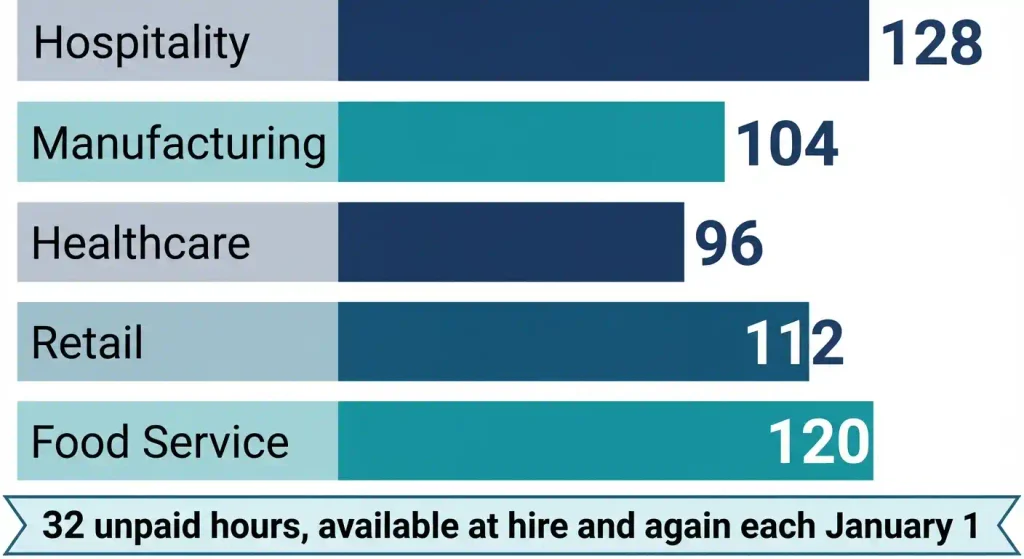
| Employer Size | Leave You’re Owed |
|---|---|
| 100 or more employees | 56 paid hours |
| 5 to 99 employees | 40 paid hours |
| 4 or fewer employees, net income over $1 million | 40 paid hours |
| 4 or fewer employees, net income under $1 million | Unpaid instead |
| Domestic workers, any household size or income | 40 paid hours |
Employer size counts total headcount, including workers outside NYC, seasonal, and part-time staff. If your employer grows from 4 to 5 employees, or 99 to 100, your tier can change. Check with your employer or DCWP on how that applies to your accrued balance.
What Changed Under NYC’s Protected Time Off Law in 2026?
Local Law 145 of 2025 took effect February 22, 2026. It added the 32 unpaid hours, expanded covered reasons to include workplace violence, and tightened employer notice rules. ESSTA sits in the New York City Administrative Code, Chapter 8 of Title 20. Accrual and tier rules, including the 32-hour bank, are in § 20-913. Reasons for use and documentation are in § 20-914. DCWP adopted final rules under Title 6 of the Rules of the City of New York in late June 2026, effective July 23, 2026, the same date payroll systems had to start showing paid and unpaid balances separately. The amendments also scaled back the Temporary Schedule Change Act, cutting the two guaranteed schedule changes a year, a separate scheduling protection from NYC’s Fair Workweek Law, which covers predictive scheduling for retail and fast-food employers. Employers must keep a written policy and give the NYC Notice of Employee Rights in each employee’s primary language, posted visibly at work.
Who Qualifies for NYC Paid Safe and Sick Leave?
Almost everyone working in NYC qualifies, full time, part time, salaried, or new. What matters is whether you physically work inside the five boroughs.
Full-Time, Part-Time, and Hourly Employees
Hours worked don’t matter, 10 a week or 50. Temporary, seasonal, per diem, and irregular-schedule workers are covered the same as full-time staff. Fewer hours just means slower accrual, not no eligibility. A part-time server working 15 hours a week still builds a real balance, just slower than a full-time cook.
Salaried, Exempt, and Domestic Workers
Salaried and overtime-exempt employees accrue leave too. Domestic workers, like nannies and home health aides, get their own 40-hour paid guarantee, even in a household with one employee. Nonprofit employees are covered the same as anyone else.
Remote Workers and Employees Working Outside NYC
What matters is where you physically work, not where your employer’s office is. Work from an NYC office while living in New Jersey, you’re covered. Work remotely from Albany for a Manhattan employer, you’re probably not. Split your week between NYC and elsewhere, only NYC hours count toward accrual.
Independent Contractors and Union Employees
True independent contractors aren’t covered, but workers misclassified as an independent contractor often still qualify. If your employer controls your hours, location, and methods, you may be an employee under the law. A collective bargaining agreement with comparable or better benefits can exempt union employees. Narrower carve-outs apply to some construction and grocery workers under specific union contracts.
How NYC Sick Leave Accrual, Front-Loading, and Carryover Work
Leave builds up as you work, unless your employer front-loads the full year at once. Paid leave accrual starts your first day either way.
How Many Sick Leave Hours Do You Earn Per Hour Worked?
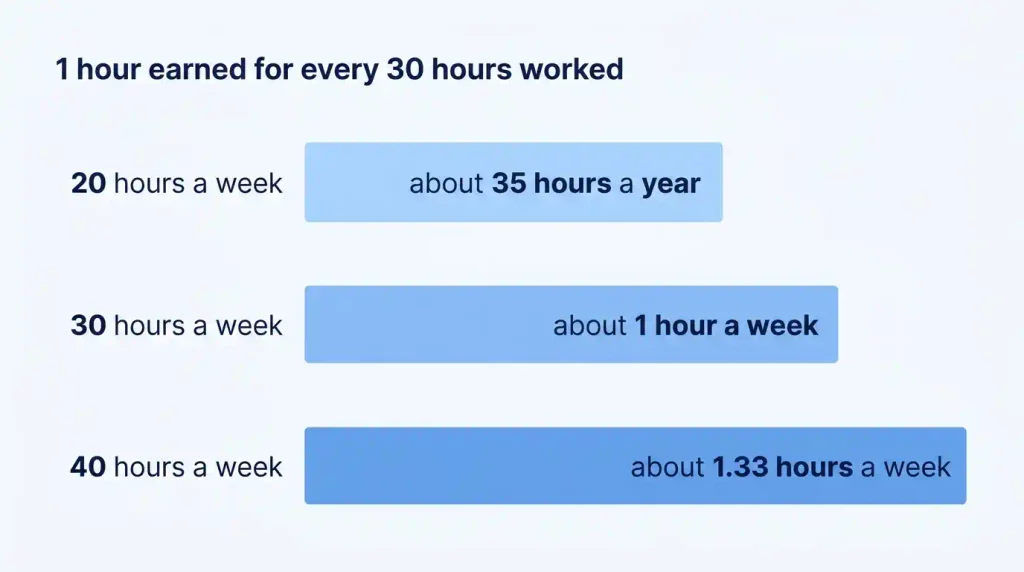
You earn 1 hour for every 30 hours worked. At 20 hours a week, that’s about 35 hours a year. At 30 hours a week, about 1 hour a week. At 40 hours, about 1.33 hours a week. Employers can round to the nearest five minutes, tenth, or quarter hour, as long as it never shortchanges you.
When Can You Start Using Paid and Unpaid Leave?
Paid leave accrues and can be used from day one. The 32 unpaid hours are available immediately at hire, no wait. A probation period, whatever its length, can’t block you from using protected leave you have available, and employers can’t set blackout dates either. Every request gets evaluated on its own.
Can Your Employer Front-Load Sick Leave?
Employers can give you the full 40 or 56 hours up front instead of accruing it hour by hour. This is legal as long as it matches your tier. Front-loading paid leave doesn’t replace the separate 32 unpaid hours, both exist and both get tracked separately.
Do Unused NYC Sick Leave Hours Carry Over?
Yes, for paid leave, up to 40 or 56 hours carry over. Employers can still cap annual use at that same number. They can’t pay out unused paid hours instead of letting them carry over, unless they already front-loaded the full year. The 32 unpaid hours don’t carry over, unused ones reset every January 1.
What Happens to Unused Sick Leave When You Leave a Job?
Employers generally don’t have to pay out unused sick time at termination, separate from what New York’s final paycheck laws require for regular wages owed. Rehired within six months by the same employer, your old balance gets reinstated. Ownership changes or internal transfers, your accrued hours follow you. There’s no provision to donate unused hours to a coworker.
What Reasons Qualify for NYC Paid Safe and Sick Leave?
The law covers more than the flu. It’s built around sick time for health reasons and safe time for safety reasons, both broader than most people expect.
Your Own Illness, Injury, and Medical Appointments
Covers physical illness, injuries, preventive care, diagnosis, and treatment, plus mental health appointments. You don’t need to be seriously ill, a dentist visit or therapy session qualifies just like a week-long flu.
Caring for Children and Other Family or Household Members
Covers a sick family member or qualifying care recipient, not just yourself, including siblings, grandparents, grandchildren, and someone not blood related but who you actually care for. The 2026 amendments widened child-related coverage. A school calling about a feverish child, or taking a parent to a specialist, both qualify.
Domestic Violence, Sexual Violence, Stalking, and Safe Leave
Safe leave covers domestic violence, sexual violence, stalking, or human trafficking, for legal proceedings, safety planning, or relocating. The 2026 update added workplace violence specifically. New York State also has its own separate domestic violence leave protections under the New York State Human Rights Law, which work alongside NYC’s.
Housing, Public Benefits, and Legal Proceedings
Covers housing proceedings like an eviction hearing, public-benefit appointments, and other legal appointments tied to a safe leave situation, like a protective-order hearing.
Public Disasters, Severe Weather, and Emergencies
Covers a declared public disaster that closes your workplace or forces a stay-home order, or your need to care for a child whose school closed for it. An ordinary snow day without an official closure doesn’t qualify.
Can You Use NYC Leave for Pregnancy and Prenatal Appointments?
Pregnancy care gets its own bank: 20 hours of paid prenatal leave per 52-week period, under New York State’s Paid Prenatal Leave Law. It applies regardless of employer size and doesn’t touch your regular sick leave balance.
How Much Does NYC Paid Sick Leave Pay?
You get your normal pay for sick leave hours, not a discounted rate.
How Your Paid Sick Leave Is Calculated
You’re paid your regular rate or the applicable New York minimum wage, whichever is higher. Hourly employees get their usual rate, salaried employees get weekly pay converted to an hourly rate. Variable schedules get averaged recent pay. A New York paycheck calculator can help confirm what a sick day should actually add to your pay.
Do Tips, Commissions, and Overtime Affect Sick Leave Pay?
Tipped employees must get at least minimum wage for sick leave hours, under the same New York tipped minimum wage rules that apply to a normal shift, even if tips usually push pay higher. Commission and variable-rate workers get a reasonable earnings estimate. Sick leave pay isn’t overtime pay, even for hours that would have been overtime.
When Should Paid Sick Leave Appear on Your Paycheck?
Pay stubs must show accrued and used hours each pay period, plus balance, split into paid and unpaid, under New York’s wage statement requirements. Paid sick leave must be paid by your next regular payday. Employers can’t withhold pay for missing documentation, especially on short absences that need none. Shorted hours should be flagged right away.
How to Request NYC Protected Time Off Without Losing Your Pay
Notice is usually required, but the rules bend for sudden situations.
How to Notify Your Employer Before Taking Leave
Foreseeable leave, like scheduled surgery, can require up to seven days’ notice. Sudden illness just needs notice as soon as reasonably possible.
Can Your Employer Demand a Doctor’s Note?
Only after more than three consecutive workdays out. Before that, written self-confirmation is generally enough. If documentation costs you money, your employer generally has to cover it. For safe leave, employers can’t demand details about your situation, and can’t ask about the medical condition behind a sick absence.
Can Your Employer Make You Find a Replacement Worker?
No. Employers can’t require you to find coverage, swap shifts, make up hours, or work remotely instead of taking leave. Any of that is a violation.
Can You Take Only a Few Hours Off for an Appointment?
Yes. A minimum increment can apply, but it can’t exceed four hours a day for the unpaid bank. A three-hour appointment only costs three hours, not a full day.
Which Leave Bank Should Your Employer Use First?
Paid leave gets used first by default, unless you ask for unpaid instead. Both banks can cover one absence, if paid hours run out, unpaid can finish it. Employers can’t deduct hours for an absence you didn’t ask to use leave for. Once both are exhausted, any further policy is up to the employer.
Can Your Employer Deny Sick Leave or Punish You for Taking It?
Properly used protected leave can’t be held against you, legally or practically.
What Employers Cannot Legally Do
No firing, cut hours, demotion, or retaliation for using protected leave. Attendance-point penalties for protected absences are illegal. A bad performance review written up because of protected leave counts as retaliation. Employers can’t force you to use vacation or PTO first instead. Discrimination or threats tied to leave use are prohibited.
Can Your Employer Deny Leave Because the Business Is Busy?
Being short-staffed isn’t a valid reason to deny leave. Employers can set reasonable scheduling and advance-notice policies, but “too busy” alone isn’t a lawful denial. Investigating real misuse is allowed, punishing legitimate use is retaliation.
What to Do If Your Employer Refuses Your Leave Request
Document when you requested leave and how your employer responded. Keep pay stubs, the written policy, your schedule, and related messages. This paper trail matters if you file a complaint.
NYC Paid Sick Leave vs. New York State and Federal Leave Laws
NYC’s law overlaps with state and federal protections, and the differences matter.
NYC Protected Time Off vs. New York State Paid Sick Leave
New York State has its own law, the New York State Paid Sick Leave Law under New York State Labor Law § 196-b, with similar tiers: 40 or 56 hours. NYC employers must comply with both, but hours don’t stack, NYC’s law meets or exceeds the state floor, so it’s one combined entitlement. State-law issues generally go through the New York State Department of Labor (NYSDOL) rather than DCWP.
NYC Sick Leave vs. New York Paid Family Leave
New York Paid Family Leave is for longer absences, like bonding with a new child or caring for a seriously ill family member over weeks or months. NYC sick leave covers shorter absences. Both can apply at once, sick leave first, then Paid Family Leave for an extended absence.
NYC Protected Time Off vs. Federal FMLA
The Federal Family and Medical Leave Act (FMLA) applies only to employers with 50 or more employees within 75 miles, and employees with at least a year there. It’s unpaid, job-protected leave for serious health conditions, enforced by the U.S. Department of Labor’s Wage and Hour Division, not any NYC agency. NYC’s law is paid, local, and has no one-year wait. The same absence can be covered by both at once.
NYC Paid Sick Leave vs. Employer PTO and Vacation
A general PTO policy that meets or beats ESSTA’s hours and conditions can satisfy the law. A basic vacation policy missing proper carryover or usage rules doesn’t automatically count. No PTO policy replaces the separate 20-hour paid prenatal leave right. A workplace injury or disability runs under its own rules, like workers’ compensation or New York’s disability insurance program under the Disability Benefits Law, and doesn’t cancel ESSTA rights.
Common NYC Paid Safe and Sick Leave Mistakes and Misconceptions
Most confusion comes from mixing up old and new rules, or assuming logic that isn’t how the law works.
The 32 Additional Hours Are Not Automatically Paid
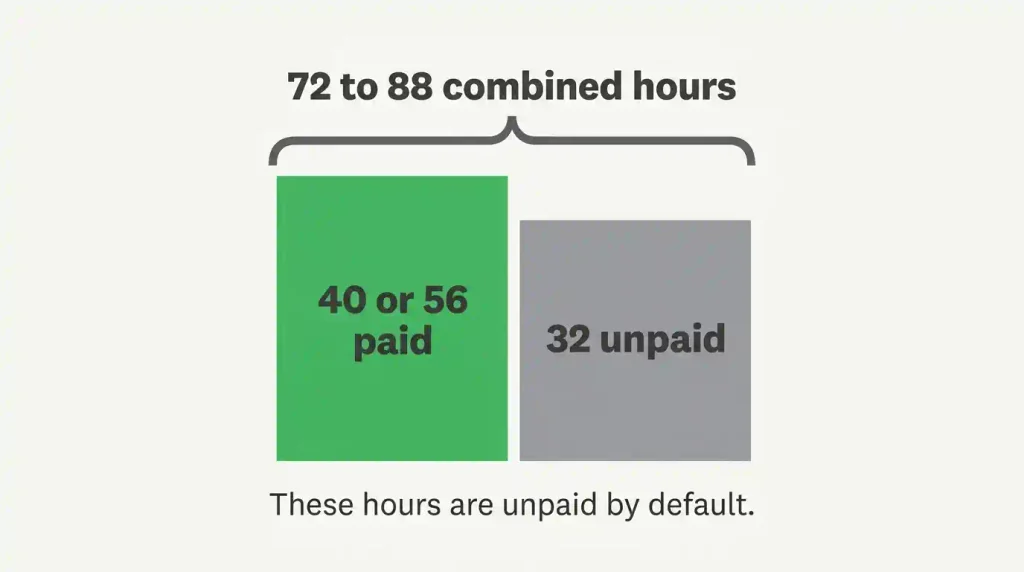
These hours are unpaid by default. Employers can choose to pay them as a benefit, but nothing requires it. Don’t assume all 72 to 88 combined hours, 40 or 56 paid plus 32 unpaid, come with pay.
Carrying Over Leave Does Not Mean Unlimited Annual Usage
Carryover doesn’t mean unlimited use. Employers can still cap annual use at the 40 or 56 hour tier amount, even if your banked balance sits higher than that cap after a few quiet years. The 32 unpaid hours never carry over, they reset every January 1.
Part-Time and New Employees Still Have Protected Rights
No minimum weekly hours are required to qualify. Leave accrues from day one, and the 32 unpaid hours are available immediately. No probation period, of any length, can block this leave.
Employers Cannot Demand a Doctor’s Note for Every Absence
Documentation can only be required after more than three consecutive workdays, not for a single callout, which is where many employers get this wrong. Shorter absences need only written self-confirmation. Safe leave documentation is more restricted, employers can’t ask for personal details.
NYC and New York State Leave Are Not Identical
Similar in structure, but not the same law, NYC’s version has city-specific provisions. Federal FMLA, unpaid and far more restrictive on eligibility, replaces neither one. All three can apply to the same employee.
How to File an NYC Sick Leave Complaint
How to File an NYC Sick Leave Complaint
File with the New York City Department of Consumer and Worker Protection (DCWP), online or by calling NYC 311. DCWP can investigate and order remedies: restored leave, back pay, and at least $500 per employee per calendar year the violation was in effect, plus a matching civil penalty, for exposure up to $1,000 per employee per year. Retaliating against a complaint is itself illegal.
NYC Paid Safe and Sick Leave 2026: Frequently Asked Questions
How many paid sick leave hours do NYC employees get in 2026?
40 paid hours a year for employers with 5 to 99 employees, 56 for 100 or more. The 32 unpaid hours are separate.
Does NYC give employees 32 additional unpaid sick leave hours?
Yes, available at hire and again each January 1. They don’t carry over if unused.
Can my employer deny my sick leave request?
Not for a qualifying reason with proper notice. Being short-staffed isn’t a valid denial.
Can my employer fire me for taking paid sick leave?
No. Firing, demoting, cutting hours, or disciplining you for proper use is illegal retaliation, including attendance-point penalties.
Can I use NYC sick leave for my child or family member?
Yes, for a sick child, spouse, parent, or other qualifying family member, including school closures or appointments.
Can my employer require a doctor’s note for one day of sick leave?
No. Documentation can only be required after more than three consecutive workdays. Shorter absences need only your written confirmation.
Do NYC sick leave hours expire at the end of the year?
Paid hours carry over up to 40 or 56, depending on employer size. The 32 unpaid hours reset every January 1 and don’t carry over.
Does NYC paid sick leave apply to part-time and remote employees?
Part-time employees are fully covered. Remote employees are covered based on where they physically work, working outside NYC for an NYC employer usually isn’t covered.
Is paid prenatal leave separate from NYC sick leave?
Yes, a separate 20-hour bank per 52-week period that doesn’t touch your regular sick leave balance.
Where can I report an employer for violating NYC sick leave law?
File with the New York City Department of Consumer and Worker Protection online or call NYC 311. Retaliation for filing is itself illegal. If your specific paycheck situation feels more complicated than this covers, our team is happy to help, just reach out through our contact page.

Meet Yasin Ali, Founder
Yasin built NY Paycheck Calculator in 2020 after getting fed up with calculators that treated New York like every other state. Most tools ignore the extra local tax NYC and Yonkers workers pay on top of state tax — or skip New York’s Paid Family Leave deduction entirely.
He keeps the numbers current, checking in regularly against the latest IRS, NY Department of Taxation and Finance, and Paid Family Leave rates.
All results here are estimates based on official sources. For advice specific to your situation, talk to a tax professional.